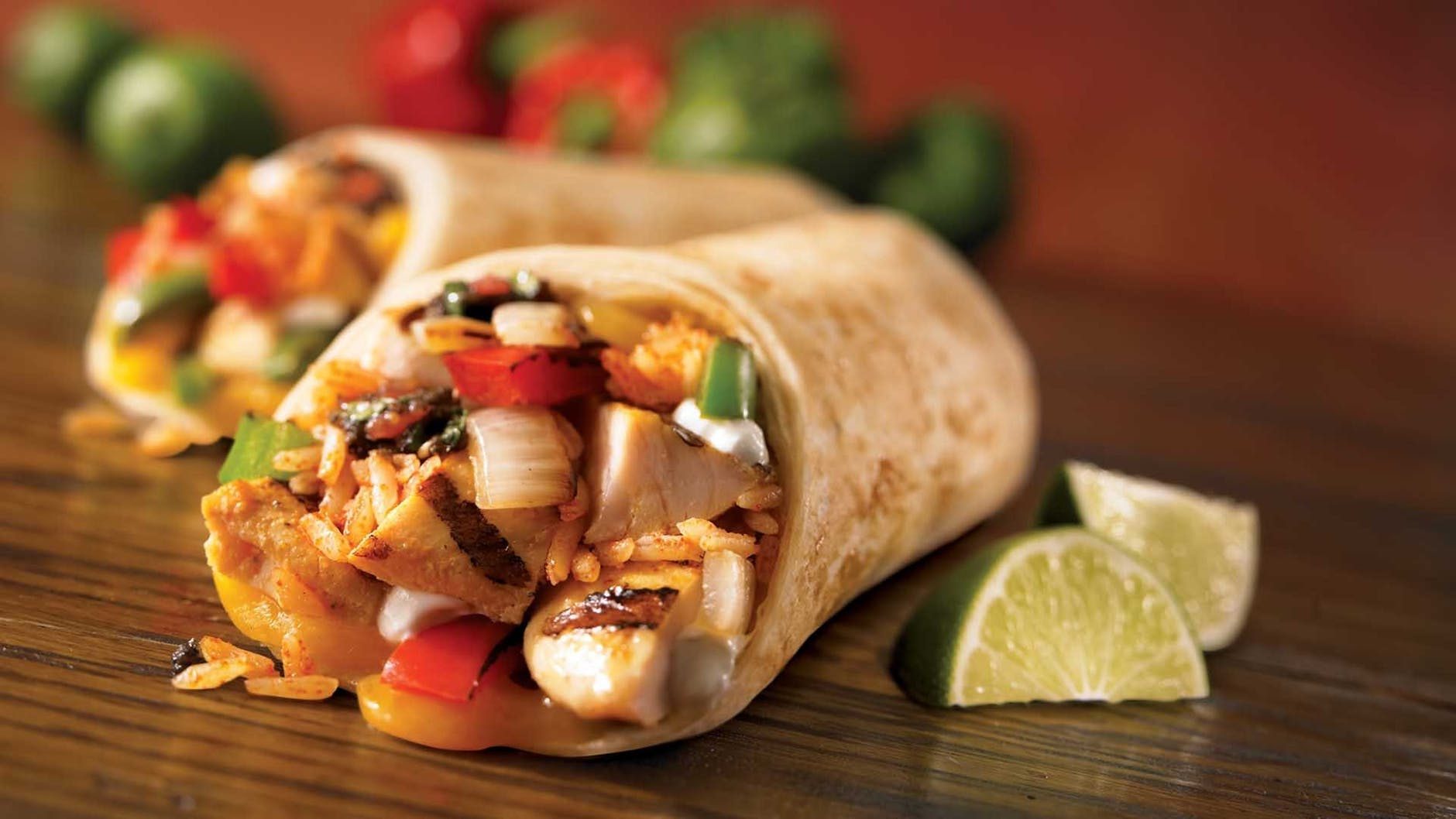
I searched up ‘mission burrito’ on Google Scholar and one of the first finds was an article by Sarah C. Wyer from a ‘journal of foodways and culture’ called ‘Digest’. She first discusses here move from San Diego, California to Eugene, Oregon and the drastic differences in the Mexican food. She particularly misses her favorite dish, the California burrito. “San Diego’s California Burritos are often too large to hold without the aid of wrapped paper, which is part of the experience of eating one”, she writes. This resembles the stature of the mission-style burrito.
Interestingly, she categorizes this burrito as featuring “inauthentic authenticity”. Perhaps this is a falsified and mistaken sense of calling something legitimate without knowing the story? Wyer calls the dish “neither Mexican nor American cuisine” and that for her, it signals an “authentic reminder of her hometown”. I think I understand now this term ‘inauthentic authenticity’ to signify that authenticity can be subjective. For Sarah, the burrito makes her think of her homeland, but would everyone else consider this particular dish to be authentic?
She goes on to call the burrito a highly ‘regionalized’ and ‘localized’ meal. We see this in other areas of the world who develop their own iterations of certain foods to appease the locals. In a similar light, this burrito is an “authentic, regional cuisine that differentiates San Diegan Mexican food from other regions”. So, this dish may have been appropriated, but that process marked it with a uniqueness that the people of the city identify with.
Wyer proceeds to compare this California burrito to the likes of the Coney Island hot dog, or the Philly Cheese Steak, or even the Chicago Deep-Dish Pizza. The idea is that these foods are tied to a certain place even though they may not be true to the very first way it was produced. In this way, she says that authenticity is not ‘immemorial’ and it’s instead “forged and remade, adapted and fluid”.
I’m not sure what to make of Wyer’s concept of ‘inauthentic authenticity’. I understand and agree with her idea that these foods do become ‘place-based’, but I don’t know that I define authenticity as specific and personal. I suppose the best way to sum up the debate is to accept that that the California burrito may only regarded as authentic to the people of San Diego, for instance. They deem the California burrito authentic for their own ‘culture’, but it may not exactly be authentic to its original form as in the culture of Mexico.
Next, we look at the work of Tony Long from foodrepublic.com. His article is titled “A Brief History of Mission-Style Burritos” and views it as ‘America’s favorite burrito’ in the subheading. He begins by personifying San Francisco as a ‘magical’ place for foodies and that it has become known for its burritos. This is only because the taqueria El Faro first began serving their burritos in 1961.
Long brings up the debate as to how San Francisco could possibly have the world’s best burritos. He rhetorically asks if it’s “better than L.A., Texas, or Arizona”? He doubles down with a “damn straight” that it’s the ‘best burrito on the planet’. I don’t want to call into question that the Bay Area some awesome burrito joints, but Long considering them the best in the world means that there are no other burritos that are better. Has he tried other burritos around the globe? They may be the calling card for San Francisco, but him calling them the best is different than calling them his favorite or the best he’s had.
He says the Mission district has a ton of taquerias and they each have their unique spin on their dishes with no two being alike. Long writes that a local cook named Afreen Wahab, appreciates the Mission-style burrito for its ‘versatility’. She likes that it can accommodate for one’s preferences when it comes to the choice of condiments. Its size may be intimidating, but this makes it filling and ‘cost effective’. You certainly get a lot of bang for your buck!
Long then compares the Mission burrito of the San Francisco to the California burrito of San Diego, as discussed from Wyer’s work. He criticizes its name as being ‘arrogant’, likely because he doesn’t think it should encapsulate the representation of the state’s burrito. He doesn’t believe this dish has the ‘tasty ingredients’ of the mission version and seems to scoff at the notion that they replace rice with French fries. Long even downgrades the burrito as ‘scrawny’.
I think it’s unfair for Long to look down upon the California burrito. I do, though, understand his points and what he takes exception to. The mission burrito doesn’t speak for the entire state as it’s only named after a specific district, unlike how the California burrito identifies mainly with San Diego, but it takes the name of the state. Maybe I understand the disdain for rice being substituted for French fries considering how vital rice usually is for the burrito, but that doesn’t make it right either. Calling the dish ‘scrawny’ and not being ‘tasty’ is a totally subjective take, though. I would call that arrogant of him because the people of San Diego identify with that dish.
This next article turns out to be one that we read as a class very early on in the semester. It comes from Eater by Gustavo Arellano and it’s called “There Is Only One Burrito in America Now, and That Burrito, Unfortunately, Is Chipotle”. I’m going to skip towards the middle point of the piece that discusses the mission burrito a little more in-depth. He initiates this part talking about how “the chipotle was a known commodity for Mexicans that suddenly turned trendy in the hands of white Americans, for white Americans” (Arellano). We see here the evident case of cultural appropriation of the pepper for business means as well as a bit of foreshadowing for a later thought.
Arellano claims that Chipotle, the Mexican fast food joint, ‘relied’ on the mission burrito. By now, I know that it at all started at El Faro, but I didn’t know the story behind how it came about until now. “Febronio Ontiveros took a challenge from firefighters at a nearby station and made a burrito out of two flour tortillas, laid edge to edge” (Arellano). This ‘experiment’ spearheaded the dish’s popularity and Ontiveros even required a tortillería to custom-bake these massive tortillas.
Once Chipotle founder Steve Ells discovered this burrito, he opened the first restaurant in Colorado in 1993. Chipotle went on to become a ‘media darling’ and its competitors copied to largeness of the mission burrito. Despite Ells’ appropriation of the dish, he was the one to receive the credit for its rise to prominence. “Chipotle took a known commodity among Mexicans that suddenly turned trendy in the hands of white Americans, for white Americans” (Arellano). When Ells described the burrito in an interview, Arellano noticed that there wasn’t any ‘excitement in his description’ and no ‘enthusiasm’. “It was just Mexican food” (Arellano). It’s just a means to an end for him; he doesn’t care about the culture and people who are truly behind the dish.
I come away from this feeling frustrated for the Mexican people. We’ve talked about it a lot and delving into this example further magnifies the issue for me. Ells was privileged enough to have the opportunity to get the culinary degree that not all others are able to have. He took advantage of his status to Americanize the mission burrito to make money. He’s even delusional enough to believe that he “improved on the quality and taste of the food” (Arellano). Arellano uses the perfect word to describe the process of the American mission burrito: sanitization.
This article is a much older piece written by Tara Duggan of SF Gate called “The Silver Torpedo” coming from back in 2001. She first talks about a special variant of the mission burrito that’s even bigger than the average one. It was created by La Coste and was deemed the ‘World’s Largest Burrito’ back in the Guinness Book of World Records in 1998.
This mighty burrito is comprised of “4,456 pounds of tortillas, chorizo, rice, beans, salsa, sour cream and tinfoil into a 3,578.8-foot-long snake of a burrito” (Duggan). I wish I could see a photo of this spectacle, but I don’t see one in this article and can’t find one elsewhere either.
Duggan proceeds to explain how the dish is not merely made as ‘excess’, due to its size, but “symbol of Bay Area individuality”. Giving the customer freedom in deciding the elements of their own burrito provides the dish its ‘cult status’. Some other nicknames for the burrito are the “Cylindrical God, Silver Torpedo, and Urban Food Log” (Duggan).
“The burrito originally came from northern Mexico”, “consisted of a hunk of spiced meat wrapped in a tortilla” and was designed by ‘miners’ to be a “portable meal for ranchers and miners” (Duggan). So, it’s not necessarily something new. It’s that the taquerias and the style of serving these burritos to go was something different for people.
The “mission burrito is not always respected among Mexican Americans” (Duggan). Miguel Jara, owner of La Taqueria, says that Mexican people more frequently order tacos while Americans and Mexican Americans more frequently request burritos. Jara thinks this is because Mexicans are accustomed to ordering from the taco stands that were prominent in their homeland.
I thought this article might have been outdated considering how old it is, but it provided a lot of insight on the mission burrito that I didn’t yet know. I liked how Duggan promoted the idea that the dish personifies ‘individuality’, showing that it’s unique to the Mission district culture. I also didn’t know its origins outside of San Francisco and how it partially became popular because it was essentially fast food. People could afford it, not wait long, and satisfy their hunger. Lastly, the demographics in relation to dish choice was interesting. It makes sense that Mexicans seemed to prefer tacos over burritos because that’s what they’re more traditionally used to.
Last off is an article by Kevin Alexander from Thrillist. He claims the San Diego California burritos are ‘inferior’ to the San Francisco Mission burritos and gives eight reasons why. Apparently, the rivalry here is very real. This document was made in retaliation to another article whose author gave their reasons why the opposite is true. Alexander says he will use “logic” and “irrefutable factual evidence” to give his counter argument.
Firstly, he claims the mission burritos ‘improves on the original’ by adding guacamole, sour cream, rice, and beans. Then, he says San Diego didn’t have their burritos first. San Francisco is closer to the site where burritos first rose to popularity in the United States which he says is the El Cholo Spanish café in Los Angeles.
He then brings up that the mission style is the “most imitated and popular burrito style in the world” (Alexander). This we can attest to as it we saw earlier how it was part of the forefront for Chipotle. Alexander then talks about a study conducted by FiveThirtyEight. It tested “67,00 restaurants to find the 64 best burritos in the country” (Alexander). He doesn’t say exactly who came first, but his hint is that it was “not a place in San Diego”.
His fifth reason is that having foil is better than no foil because it keeps it warm and holds all the ingredients together. I think he loses a bit of credibility with reason number six. Maybe it’s a playful joke, but he just says, “California burritos are gross”. He points out how the fries ruin the dish by making it soggy. Perhaps I can respect that reasoning a little bit more.
Alexander calls the mission burrito ‘personal’, which is true, but see saw earlier how personal the San Diego burrito was for Sarah Wyer. His last point is a ‘piece of advice’ to ‘stick to fish tacos’.
It’s always hard to write opinionated, divisive articles like this without insulting a certain group of people. It’s another thing to come up with reasons that completely lack objectivity. I was listening to Alexander’s points up until that sixth one which was just silly and just childish. Even the last one had nothing to do with the burrito and was just a jab at them. Maybe it’s just friendly banter and I’m overreacting, but the article this was made in response to didn’t have as much subjectivity.
Works Cited
Alexander, Kevin. “8 Reasons SD California Burritos Are Inferior to SF Mission Burritos.” Thrillist, Thrillist, 22 Jan. 2015, http://www.thrillist.com/eat/san-francisco/sf-mission-burritos-better-than-sd-california-burritos.
Arellano, Gustavo. “How Chipotle Sanitized the Mission-Style Burrito for America.” Eater, Eater, 23 Apr. 2019, www.eater.com/2019/4/23/18410654/chipotle-burrito-american-pepper.
Duggan, Tara. “The Silver Torpedo / The Weighty, One-of-a-Kind Mission Burrito Has Reached Cult Status among Its Wide Variety of Fans.” SFGate, San Francisco Chronicle, 1 Feb. 2012, http://www.sfgate.com/restaurants/article/The-Silver-Torpedo-The-weighty-one-of-a-kind-2926358.php.
Long, Tony. “A Brief History of Mission-Style Burritos.” Food Republic, 5 Aug. 2011, http://www.foodrepublic.com/2011/08/05/a-brief-history-of-mission-style-burritos/.
Wyer, Sarah C. “The San Diego Burrito Authenticity, Place, and Cultural Interchange.” Digest: A Journal of Foodways and Culture, digest.champlain.edu/vol3_issue2/images/pdf_downloads/wyer.pdf.
 Taco Literacy